


Many people assume that an e-bike does all the work, so riding one can't possibly count as exercise. The truth is more nuanced—and more encouraging. Pedal assist helps you ride farther and climb hills you might otherwise avoid, but you are still pedaling, still moving, and still burning calories. For beginners who find traditional cycling intimidating or physically demanding, an e-bike can actually be the gateway to more consistent physical activity, not less.
This guide walks through the real health benefits of regular e-bike riding, what the research says, and how to use your Drvetion e-bike to build a fitness habit that actually sticks.
Does E-Bike Riding Actually Count as Exercise?
Yes. Multiple peer-reviewed studies have shown that e-bike riding qualifies as moderate-intensity physical activity—the same category as a brisk walk or a leisurely swim. The key difference is that e-bike riders often log more miles and ride more frequently than conventional cyclists, because pedal assist removes the barriers that keep people off the bike: hills, headwinds, long distances, and the fear of arriving sweaty.
Key finding: A 2023 study published in the Journal of Transport & Health found that e-bike riders averaged 45 minutes of continuous pedaling per trip. Ridden three or four times a week, that comfortably clears the WHO recommendation of 150 minutes of moderate activity.
The pedal assist does not replace your effort—it amplifies it. On your Drvetion e-bike, the BAFANG mid-drive motor delivers torque only when you pedal. Choose a lower assist level and you work harder; choose a higher level and the ride feels easier. You are always in control of the intensity.
Cardiovascular Benefits: Your Heart on an E-Bike
Regular cycling—electric or not—strengthens your heart, lowers resting heart rate, and improves circulation. Because e-bike riding is easier on the joints and feels less exhausting, beginners tend to ride longer and more often, which compounds the cardiovascular benefit over time.
With consistent riding (3–4 times per week, 30+ minutes per ride), you can expect:
- Improved heart and lung efficiency within 6–8 weeks
- Lower resting heart rate and blood pressure over 3–6 months
- Better oxygen uptake (VO₂ max), even at moderate pedal-assist levels
- Reduced risk of cardiovascular disease, type 2 diabetes, and metabolic syndrome
Your Drvetion e-bike's 7-speed SHIMANO drivetrain lets you fine-tune the resistance. On flat terrain, use a higher gear with lower assist for a stronger cardiovascular workout. On hills, drop to a lower gear and let the motor share the load—your heart rate stays in the beneficial zone without overloading your knees.
Joint-Friendly Movement: Easier on Knees, Hips, and Ankles
One of the most important health advantages of e-bike riding is that it is low-impact. Unlike running, which sends repeated shock through your joints, cycling supports your body weight and moves your legs through a smooth, circular motion. Research from the University of Basel found that pedal assist reduces the force required at the knee joint by roughly 20–30% compared to a conventional bike.
This makes e-bike riding a strong option if you:
- Are recovering from a knee or hip injury
- Carry extra weight and want to avoid joint stress
- Have arthritis or chronic joint stiffness
- Are new to exercise and building baseline fitness
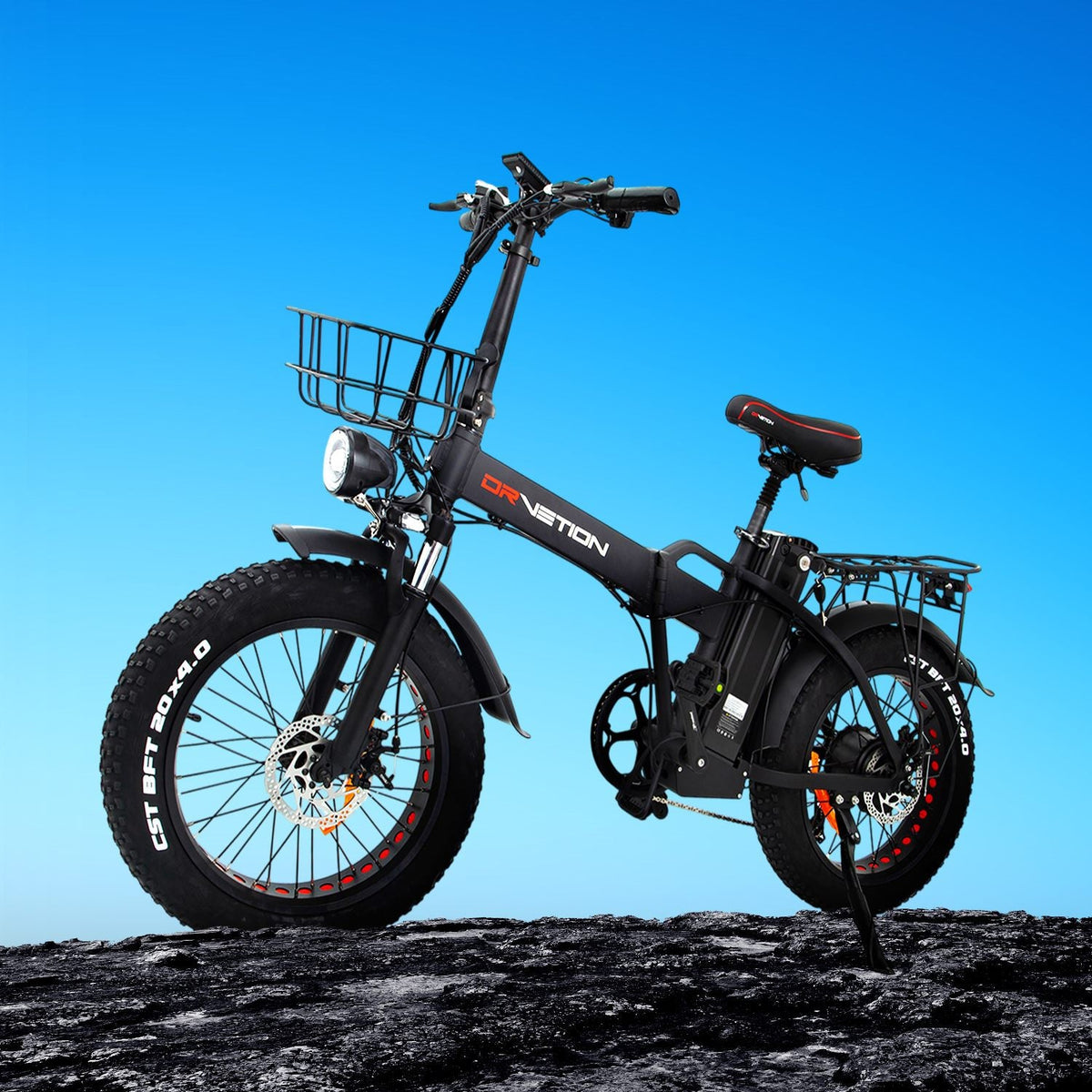
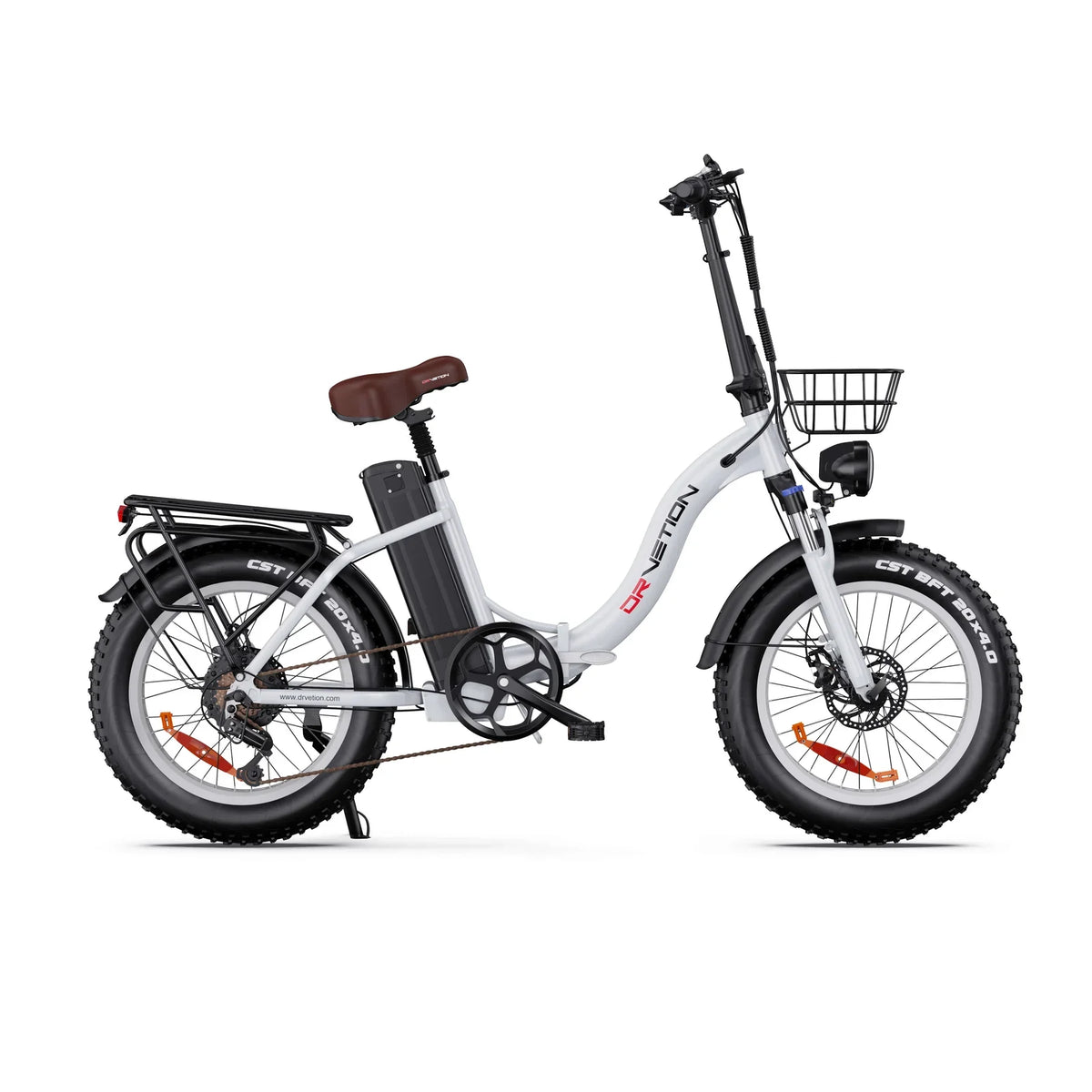
The upright riding position—standard across the CT20, AT20 PRO, and CTR26 series—keeps your spine neutral and reduces strain on the lower back, wrists, and neck. The wide CST 20×4.0" fat tires absorb road vibrations that would otherwise travel through the frame into your body.
Mental Health and Mood: The Outdoor Advantage
Exercise releases endorphins, but outdoor exercise adds another layer. Sunlight exposure supports vitamin D production and regulates circadian rhythm, and has been independently linked to lower rates of depression and anxiety. Riding through natural environments—parks, river paths, tree-lined streets—further reduces cortisol levels in what researchers call "green exercise."
E-bike riding specifically has been associated with:
- Reduced perceived stress after a single 30-minute ride
- Improved mood and energy levels that last throughout the day
- A greater sense of autonomy, especially for riders who gave up cycling due to fitness or age
- Social connection when riding with friends or family at mixed fitness levels
You do not need a long, intense ride to feel the mental benefit. A relaxed 20-minute loop around your neighborhood in the morning sunlight can shift your mood for hours.
Calorie Burn: What You Actually Burn
A common concern is whether e-bike riding burns enough calories to matter. The answer depends on your weight, terrain, assist level, and ride duration—but the numbers are more encouraging than you might expect.
Approximate calories burned per 30 minutes of e-bike riding:
- 120 lbs (55 kg): 150–180 cal at low assist, 120–150 at medium, 100–130 at high
- 155 lbs (70 kg): 200–240 cal at low assist, 160–200 at medium, 130–170 at high
- 190 lbs (86 kg): 250–300 cal at low assist, 200–250 at medium, 170–210 at high
For comparison, a 30-minute brisk walk burns roughly 120–170 calories for a 155 lb person. Riding an e-bike at medium assist matches or exceeds that, and most riders cover considerably more distance in the same time.
The key insight: consistency matters more than intensity. A 30-minute e-bike commute five days a week burns 1,000–1,500 extra calories—without ever setting foot in a gym.
Building a Beginner Fitness Routine
If you are new to exercise or returning after a break, the goal is to build gradually. Here is a simple progressive plan using your Drvetion e-bike.
Week 1–2: Establish the Habit
- Ride 3 times per week, 15–20 minutes each
- Use pedal assist level 2–3 (moderate)
- Choose flat, familiar routes
- Focus on consistency, not speed or distance
Week 3–4: Increase Gradually
- Ride 4 times per week, 25–35 minutes each
- Introduce one hilly route per week, using level 1–2 assist on the climbs
- Try one ride per week at a lower assist level for more effort
- Track your distance and average speed on your phone or a cycling computer
Week 5 Onward: Progress at Your Pace
- Add a fifth ride if you are enjoying it
- Try interval riding: 2 minutes of high effort (low assist, high gear) followed by 3 minutes of easy spinning
- Set a monthly distance goal—50 km, 100 km, whatever feels motivating
- Join a local e-bike group ride for variety and accountability
A Fitness Riding Checklist
Before each ride:
- Tire pressure in the recommended range (20–25 PSI for fat tires)
- Battery charged to at least 60% so you don't cut the ride short
- Water bottle filled—hydration matters even on easy rides
- Phone or cycling computer ready to track distance and time
- Route planned with a mix of flat and gently rolling terrain
- Clothing allows full range of motion; avoid overly loose pants near the chain
- Brief stretch before mounting: ankle circles, knee bends, shoulder rolls
After the ride:
- Log your distance, time, and how you felt—a simple phone note works
- Drink water and have a light snack within 30 minutes
- Wipe down the frame and chain if the route was dusty or wet
Tracking Your Progress
Measurable progress keeps you motivated. These are the simple metrics worth watching:
- Weekly riding time: aim for 90–150 minutes total
- Monthly distance: a gradual increase of 10–20% per month is sustainable
- Resting heart rate: a downward trend over weeks indicates improving cardiovascular fitness
- How you feel: energy levels, sleep quality, mood—these often improve before the numbers do
You do not need expensive equipment. A basic cycling computer or a free smartphone app is enough. What matters is that you ride regularly and notice the changes over time.
Common Questions from Beginners
I want to lose weight. Is an e-bike enough?
Weight management comes down to a sustained calorie deficit. Regular e-bike riding contributes meaningfully to that deficit, especially when combined with a balanced diet. The real advantage of an e-bike is that it is enjoyable enough to do daily—which builds a habit that gym memberships often fail to sustain.
I have bad knees. Should I ride at high assist to avoid pain?
Use the lowest assist level that lets you pedal comfortably without pain. The goal is smooth, pain-free movement. If a certain gear or assist level causes discomfort, adjust until it doesn't. Consult a physiotherapist if you are unsure about your specific condition.
How soon will I feel the benefits?
Most riders notice improved mood and energy within the first two weeks. Cardiovascular improvements—a lower resting heart rate, easier breathing on hills—typically appear within 6–8 weeks of consistent riding. Weight changes, if that is your goal, become visible after 2–3 months of regular riding combined with sensible eating.
Can I use my Drvetion e-bike for indoor training?
Drvetion e-bikes are designed for outdoor riding. If weather or schedule prevents outdoor rides, use that time for light stretching or bodyweight exercises. When conditions allow, get back on the bike—the outdoor environment is part of the health benefit.
Need Help?
If you have questions about using your Drvetion e-bike for fitness riding, or need guidance on pedal assist settings for your specific model, contact our support team:
- Email: sale@drvetion.com
When contacting support, include your e-bike model (CT20, CT20 PRO, AT20 PRO, CTR26, etc.), your fitness goals, and any physical considerations such as a knee or back issue. That way we can give you advice that actually applies to your ride.
Final Thoughts
An e-bike is not a shortcut around exercise—it is a way to make exercise something you actually do. The pedal assist lowers the barriers that stop people from riding at all, and once you are riding, the fitness follows naturally.
Start with three short rides a week at a comfortable assist level, add distance gradually, and track what you cover. Do that for two months and the changes show up in more places than your odometer. Ride often, pedal when you can, and let the motor handle the rest.
Have questions about fitness riding or your specific model? Visit our Product Guide for detailed specifications, or email us at sale@drvetion.com for personalized assistance.
Share:
E-Bike Battery Care 101: How to Charge, Store, and Maximize Your Drvetion Battery's Lifespan