


As temperatures drop and winter approaches, proper preparation ensures your Drvetion e-bike stays in top condition throughout the cold months. Cold weather affects battery performance, tire pressure, and component wear. This guide walks you through the essential steps to protect your investment and maintain safe riding conditions.
Understanding Cold Weather Impact on E-Bikes
Lithium-ion batteries, like the Samsung 21700 50E cells in your Drvetion e-bike, are sensitive to temperature changes. When temperatures fall below 50°F (10°C), battery chemistry slows down, reducing available capacity and range. This is normal and temporary—your battery will recover when temperatures rise again.
However, repeated exposure to extreme cold without proper care can accelerate long-term battery degradation. The same applies to other components: tires lose pressure in cold weather, lubricants thicken, and moisture from rain, snow, or road salt can cause corrosion if not addressed promptly.
Battery Care: Your Top Priority
Charging in Cold Weather
Your Drvetion e-bike's 48V battery (available in 15Ah 720Wh or 20Ah 960Wh configurations) requires specific temperature conditions for safe charging.
Charging temperature range: 32°F to 113°F (0°C to 45°C)
Never charge your battery when it's below freezing. If your e-bike has been stored in a cold garage or shed, bring the battery indoors and let it warm to room temperature before connecting the charger. Charging a cold battery can cause permanent damage and void your warranty.
Best practices:
- Charge your battery indoors at room temperature (59-77°F / 15-25°C)
- Allow 1-2 hours for a cold battery to reach room temperature before charging
- Use only the original Drvetion 48V 2A smart charger (100-240V input)
- Charging time: 4-7 hours until the indicator turns green
- Do not leave the charger connected for more than 24 hours
Storage Temperature
If you're storing your e-bike for extended periods during winter:
Ideal storage temperature: 59-77°F (15-25°C)
Avoid storing your battery in unheated garages, sheds, or vehicles where temperatures can drop below freezing or rise above 140°F (60°C). Extreme temperatures accelerate capacity loss.
Storage charge level: 50-70%
Don't store your battery fully charged or completely depleted. A partial charge reduces stress on the cells. Check the charge level monthly and top up if it drops below 50%.
Expected Range Reduction
In cold weather (below 50°F / 10°C), expect 20-30% range reduction compared to warm-weather performance. Your Drvetion e-bike's rated ranges are:
Pure Electric Mode:
- 15Ah battery: 25-35 km (15-22 miles)
- 20Ah battery: 60-80 km (37-50 miles)
Pedal Assist Mode:
- 15Ah battery: 60-90 km (37-56 miles)
- 20Ah battery: 80-120 km (50-75 miles)
In cold weather, these ranges may decrease. Plan your rides accordingly and keep your battery charged above 30% to avoid being stranded.
Tire Pressure Adjustments
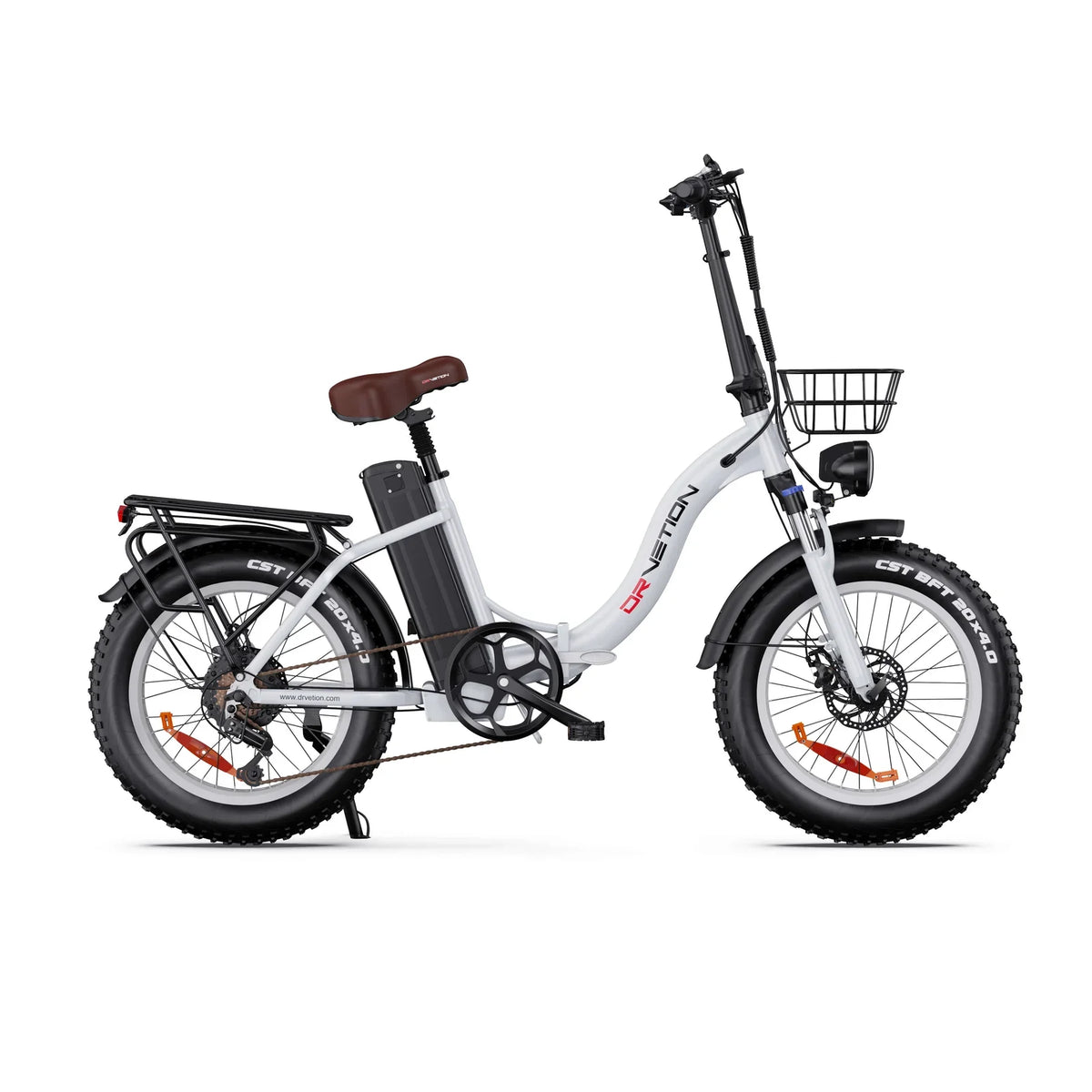
Cold air contracts, causing tire pressure to drop. Your Drvetion e-bike's CST 20×4.0" fat tires should be checked weekly during winter months.
Recommended winter tire pressure: 20-25 PSI
Lower pressure (within the safe range printed on your tire sidewall) provides better traction on wet or slippery surfaces. However, don't go below 20 PSI, as this increases the risk of pinch flats and rim damage.
Checking pressure:
- Check tires when they're cold (before riding)
- Use a reliable pressure gauge
- Inflate to the recommended range based on your weight and riding conditions
- Heavier riders should use higher pressure within the range
Brake Maintenance for Wet Conditions
Winter riding often means wet roads, rain, and road salt. Your hydraulic disc brakes need extra attention to maintain stopping power.
Weekly checks:
- Squeeze both brake levers firmly—they should engage smoothly without touching the handlebar
- Inspect brake pads for wear (replace if thickness is less than 1mm)
- Clean brake rotors with isopropyl alcohol if they become contaminated
After riding in wet conditions:
- Dry your brakes by gently applying them several times while riding slowly
- Wipe down brake rotors with a clean, dry cloth
- Inspect for any unusual noises or reduced performance
If your brakes feel spongy or make grinding noises, have them serviced immediately. Water and road salt can accelerate wear on brake components.
Chain and Drivetrain Care
The SHIMANO 7-speed drivetrain on your Drvetion e-bike requires regular lubrication, especially in winter when moisture and road salt are present.
Winter maintenance schedule:
- Clean and lubricate the chain every 200-300 km (125-185 miles), or more frequently if riding in wet conditions
- Use bicycle-specific chain lubricant (wet lube for winter conditions)
- Wipe off excess lubricant to prevent dirt buildup
- Inspect the chain for rust or stiff links
Cleaning process:
- Shift to the smallest chainring and smallest rear cog
- Apply degreaser to the chain while backpedaling
- Use a chain cleaning tool or stiff brush to remove grime
- Rinse with clean water (avoid high-pressure spray)
- Dry thoroughly with a clean rag
- Apply fresh lubricant to the inner rollers while backpedaling
- Wipe off excess
Never use WD-40 or general-purpose oils as chain lubricants. These products don't provide adequate protection and can attract dirt.
Frame and Component Protection
Road salt, sand, and winter grime can corrode your e-bike's frame and components if not cleaned regularly.
After every winter ride:
- Rinse the frame with clean water to remove salt and debris
- Use a mild soap solution for stubborn grime
- Dry thoroughly with a soft cloth
- Pay special attention to the battery contacts, charging port, and electrical connections
Monthly deep clean:
- Wash the entire bike with bicycle-specific cleaner
- Inspect the frame for chips or scratches (touch up with paint to prevent rust)
- Check all bolts for tightness (handlebar, stem, seat post, rack)
- Lubricate pivot points (brake levers, derailleur, folding mechanism if applicable)
Storage Solutions
If you're not riding during the coldest months, proper storage extends your e-bike's lifespan.
Indoor storage (recommended):
- Store in a cool, dry place away from direct sunlight
- Maintain room temperature (59-77°F / 15-25°C)
- Remove the battery and store it separately at 50-70% charge
- Keep the bike away from chemicals, solvents, and sharp objects
Outdoor storage (if unavoidable):
- Use a waterproof, breathable bike cover
- Elevate the bike off the ground to prevent moisture absorption
- Remove the battery and store it indoors
- Check the bike weekly for moisture buildup or damage
Never store your e-bike in direct sunlight or near heat sources. UV radiation and high temperatures can damage the frame, tires, and battery.
Winter Riding Gear
Proper gear makes winter riding comfortable and safe.
Essential items:
- Insulated, waterproof gloves (your Drvetion's 200-lumen headlight and turn signals are operated by handlebar controls)
- Thermal layers that wick moisture
- Waterproof outer shell
- Insulated, waterproof footwear
- Balaclava or neck gaiter for wind protection
- Clear-lens glasses to protect eyes from wind and debris
Visibility gear:
Your Drvetion e-bike comes equipped with a 200-lumen headlight, left and right turn signals, and an instant brake tail light. Use them at all times during winter, even during the day. Add reflective clothing or accessories for additional visibility in low-light conditions.
When to Skip the Ride
Some winter conditions are too hazardous for e-bike riding:
- Ice or packed snow on roads or paths
- Visibility below 500 feet due to fog, rain, or snow
- Temperatures below 0°F (-18°C)
- Wind chill below -10°F (-23°C)
- Thunderstorms or lightning
- Standing water deeper than 4 inches (10 cm)
Your safety is more important than maintaining your riding routine. Use public transportation, work from home, or take a break from riding until conditions improve.
Quick Winter Preparation Checklist
Before each winter ride, verify:
- Battery charged to 100% (charged at room temperature)
- Tire pressure checked and adjusted (20-25 PSI)
- Brakes tested and functioning properly
- Chain lubricated and free of rust
- Lights working (headlight, turn signals, brake light)
- Frame clean and free of salt residue
- All bolts tight (handlebar, stem, seat post)
- Riding gear appropriate for conditions
- Phone charged and emergency contacts programmed
- Route planned to avoid hazardous areas
Need Help?
If you have questions about winterizing your Drvetion e-bike or need service, contact our support team:
- Email: sale@drvetion.com
- Hours: Monday–Friday, 9:00 AM–6:00 PM CDT
When contacting support, provide your order number, e-bike model (CT20, CT20 PRO, AT20 PRO, etc.), and a description of the issue. Photos or videos help us diagnose problems faster.
Final Thoughts
Winter doesn't mean the end of e-bike riding. With proper preparation and maintenance, you can continue enjoying your Drvetion throughout the cold months. The key is consistency: regular cleaning, proper storage, and attentive battery care make all the difference.
Remember that your e-bike is an investment. The time you spend preparing it for winter pays off in extended component life, reliable performance, and safer rides. When spring arrives, your e-bike will be ready to hit the road in top condition.
Ride safe, stay warm, and enjoy the winter trails.
Have questions about winter e-bike care? Visit our Product Guide for detailed specifications and maintenance instructions, or contact Drvetion Support for personalized assistance.
Share:
CT20 vs CT20 PRO vs AT20 PRO: Which Drvetion E-Bike Should You Buy in 2026?