

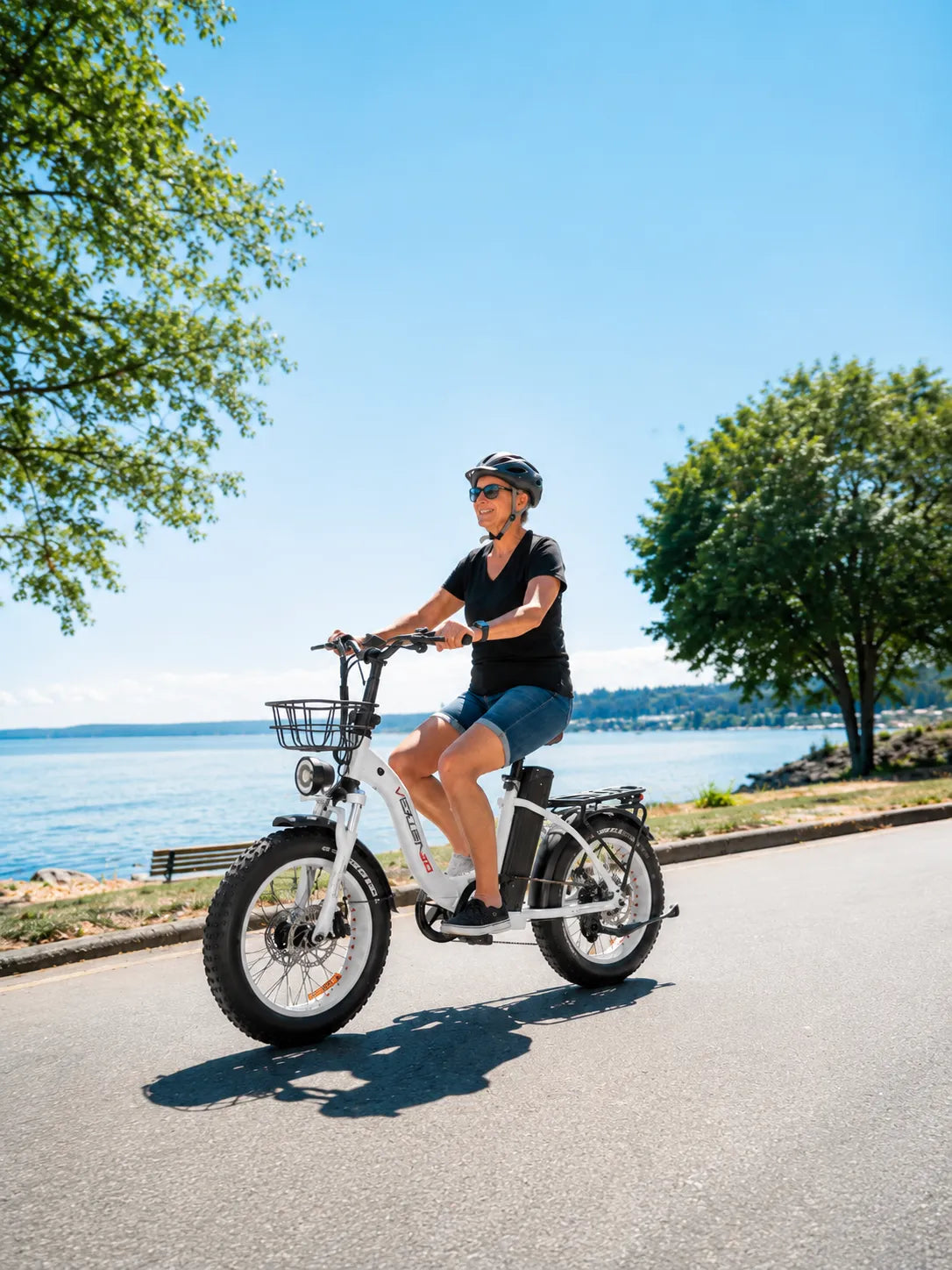
An e-bike safety checklist can be short. Take a few minutes before each ride to spot a flat tire, loose cargo, poor visibility, or a route that does not fit the conditions. Use the same care after you park, especially when it is time to charge the battery.
This e-bike safety checklist is general guidance. It does not replace your model’s manual, local traffic rules, or professional service. See damage or an issue you cannot explain? Pause the ride and contact the appropriate service provider or Drvetion Support.
Before you ride: wear the right gear
Start with a properly fitted bicycle helmet. NHTSA advises riders to make sure their helmet fits correctly and to wear equipment that helps them be seen, including bright clothing in daytime and reflective gear or appropriate lights when visibility is low.nhtsa
Choose clothing and footwear that will not interfere with the bike. Secure loose laces, pant legs, bags, and straps. Keep them away from moving parts. Carry items in an approved bag or accessory setup, not from the handlebars.
Before you ride: check the bike
Give the bike a quick visual and functional check:
- Tires: look for visible damage and confirm inflation follows the product guidance.
- Brakes: test both brakes while stationary or at walking speed in a safe place.
- Controls: make sure the handlebars, grips, and controls feel secure.
- Visibility: confirm lights and reflectors are clean and usable when your route or conditions require them.
- Cargo: secure any bag or accessory and stay within the product’s stated limits.
- Battery area: look for visible damage, unusual heat, swelling, corrosion, or moisture. Do not ride or charge a damaged battery.
The U.S. Consumer Product Safety Commission also advises riders to inspect components such as handlebars, brakes, throttle, bell, lights, tires, cables, and frame before using a micromobility device.cpsc
Ask one more question before you leave: is anything on the bike loose, damaged, or different from your last ride? If the answer is yes, solve that issue first.
Choose a route you can ride predictably
Plan for the conditions you actually have: traffic, weather, daylight, road surface, and your familiarity with the bike. If you are new to a bike or returning to riding, start in a low-traffic area. An empty parking lot or permitted path can work well. Practice starting, stopping, turning, and using the controls before you add traffic.
What could make today’s route harder than usual—rain, darkness, loose debris, or heavier traffic? Build that into your route and pace before the ride begins.
When riding on the roadway, follow traffic laws, signs, and signals, travel in the same direction as traffic, and signal before turning or changing position. NHTSA emphasizes predictable riding and defensive awareness: look ahead for hazards and assume that drivers or pedestrians may not have seen you.nhtsa
E-bike rules can vary by state and local jurisdiction, including where a particular class of e-bike may be ridden. Check your state and local rules before using trails, sidewalks, shared paths, or roadways.laws
During the ride: see, be seen, and slow down early
Keep both hands on the handlebars except when signaling. Leave time and space for braking. Slow early for turns, intersections, wet patches, gravel, and unfamiliar surfaces. Avoid sudden moves.
Treat every driveway, parking lot, and intersection as a place where another person may not see you. Slow down when sight lines are poor and give pedestrians room. Never ride while impaired or while using a phone or other distraction.
After the ride: charge with care
Battery safety belongs in every e-bike routine. CPSC advises riders to follow the manufacturer’s charging instructions, use the supplied or manufacturer-recommended charger, remain present while charging, and unplug when charging is complete. It also advises against charging while sleeping or when no one is home.charging
Do not use a battery or charger that is damaged, modified, or not approved for your specific device. If a battery looks swollen, damaged, corroded, or unusually hot, stop using it and contact support or your local hazardous-waste authority for appropriate guidance. Never place lithium batteries in household trash or regular recycling.charging
Save this checklist
Before every ride, remember: gear, bike, route, visibility, attention, charge. These are small checks, but they make it easier to spot a problem before it becomes part of your ride.
For model-specific questions, use the Drvetion Support Center and include your order number, bike model, and clear photos or video when relevant. To find the current configuration and product details for a new bike, visit the Drvetion e-bike collection.
Sources and editorial notes
NHTSA, Bicycle Safety, accessed August 1, 2026.
CPSC, Micromobility Information Center, accessed August 1, 2026.
CPSC, Micromobility Battery Charging Safety, accessed August 1, 2026.
PeopleForBikes, State by State Electric Bike Laws, accessed August 1, 2026. Confirm applicable local requirements before riding.
Share:
What Is a Fat-Tire E-Bike? A Practical Beginner’s Guide
What Is a Fat-Tire E-Bike? A Practical Beginner’s Guide