

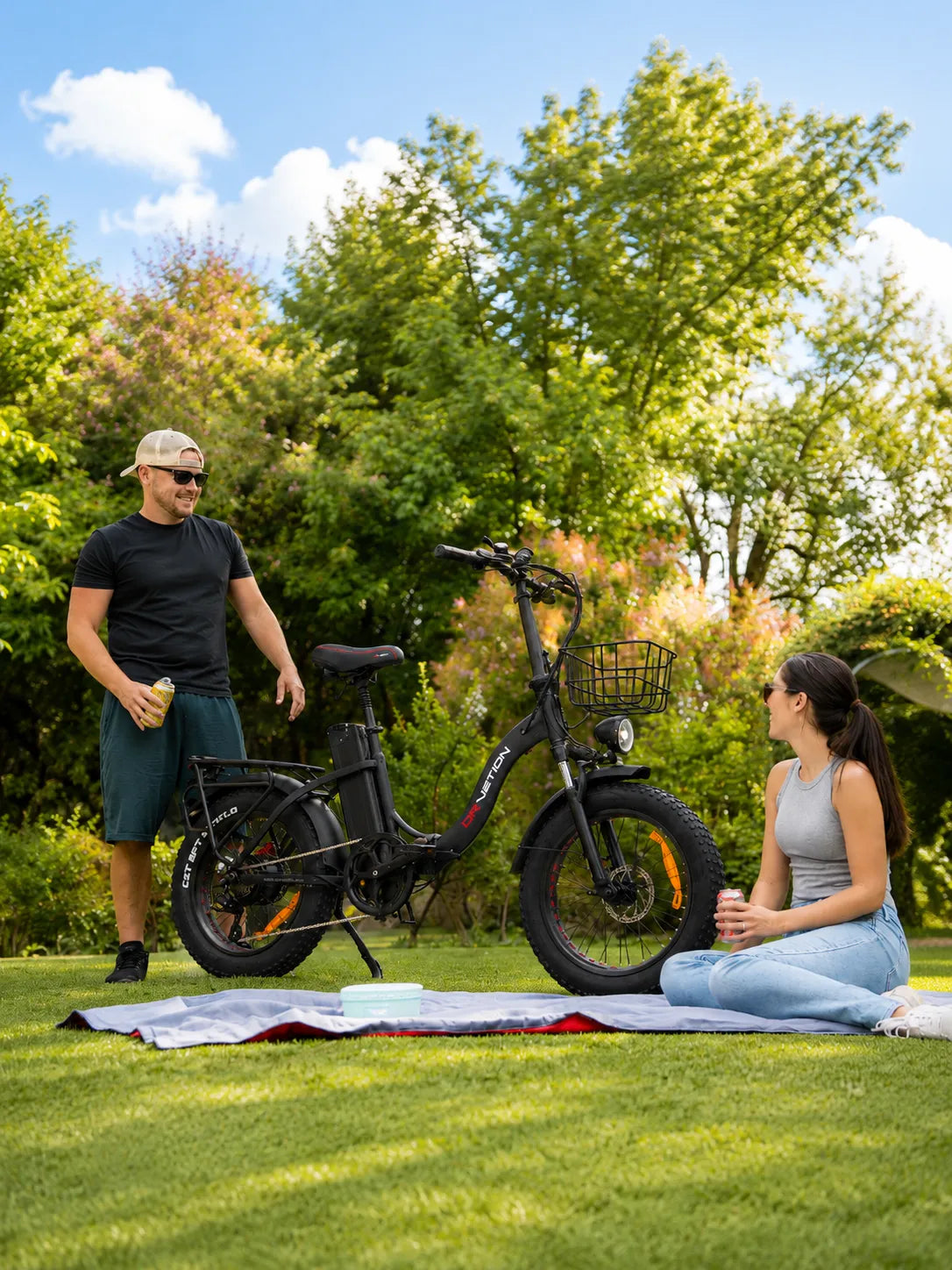
A fat-tire e-bike is an electric bicycle fitted with noticeably wider tires than a typical commuter bike. That simple difference can change how the bike feels over rough pavement, loose surfaces, and everyday obstacles. It does not make every route suitable, but it can give riders a more confidence-inspiring platform when the surface is less predictable.
The right choice still comes down to your route, storage space, fit, local rules, and the exact configuration shown on the product page. This guide explains what wider tires change—and what they do not.
What makes a fat-tire e-bike different?
The defining feature is the tire width. A wider tire has a larger air volume and a broader contact area than a conventional road-oriented tire. In practical terms, riders often notice a steadier feel when rolling over cracked pavement, gravel, packed dirt, or uneven neighborhood streets.
On an e-bike, the wider tire is only one part of the setup. Frame geometry, brakes, weight, cargo, rider experience, tire pressure, and surface conditions all affect control. That is why it is better to think of a fat-tire e-bike as a category for varied everyday surfaces—not as a promise of traction in every condition.
Where wider tires can be useful
Fat tires can make sense when your normal ride includes more than smooth bike paths. Common examples include:
- Neighborhood streets with patched pavement or potholes
- Packed dirt or light gravel paths where e-bikes are permitted
- Mixed routes that combine pavement, park paths, and short rough sections
- Riders who prefer a more substantial, planted feel at lower speeds
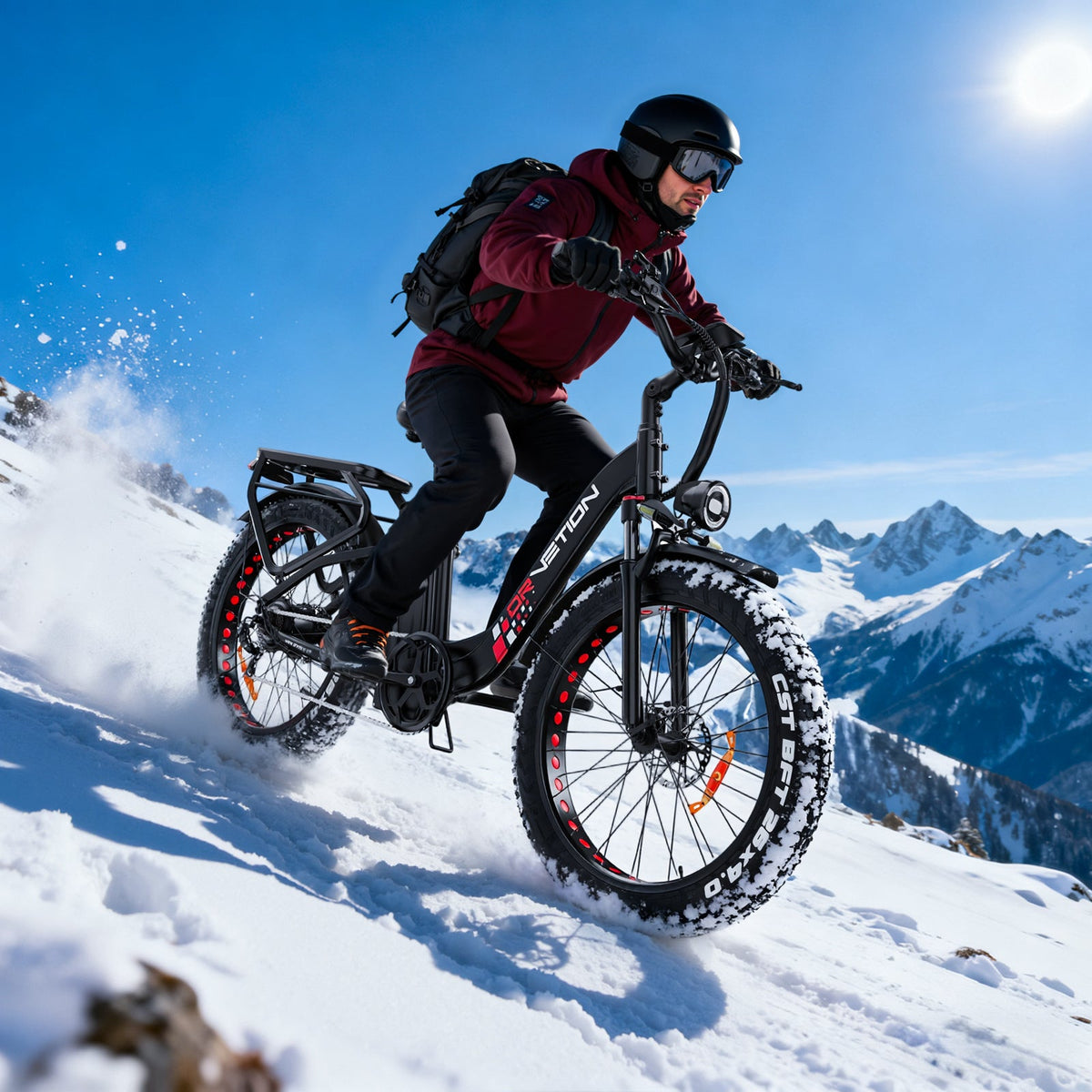
They can also be a practical choice when comfort and confidence matter more than building the lightest possible bike. But a wide tire is not a substitute for a careful route choice. Loose gravel, wet leaves, sand, standing water, steep slopes, and traffic all require slower speeds and more attention.
What to consider before choosing one
Start with your real route
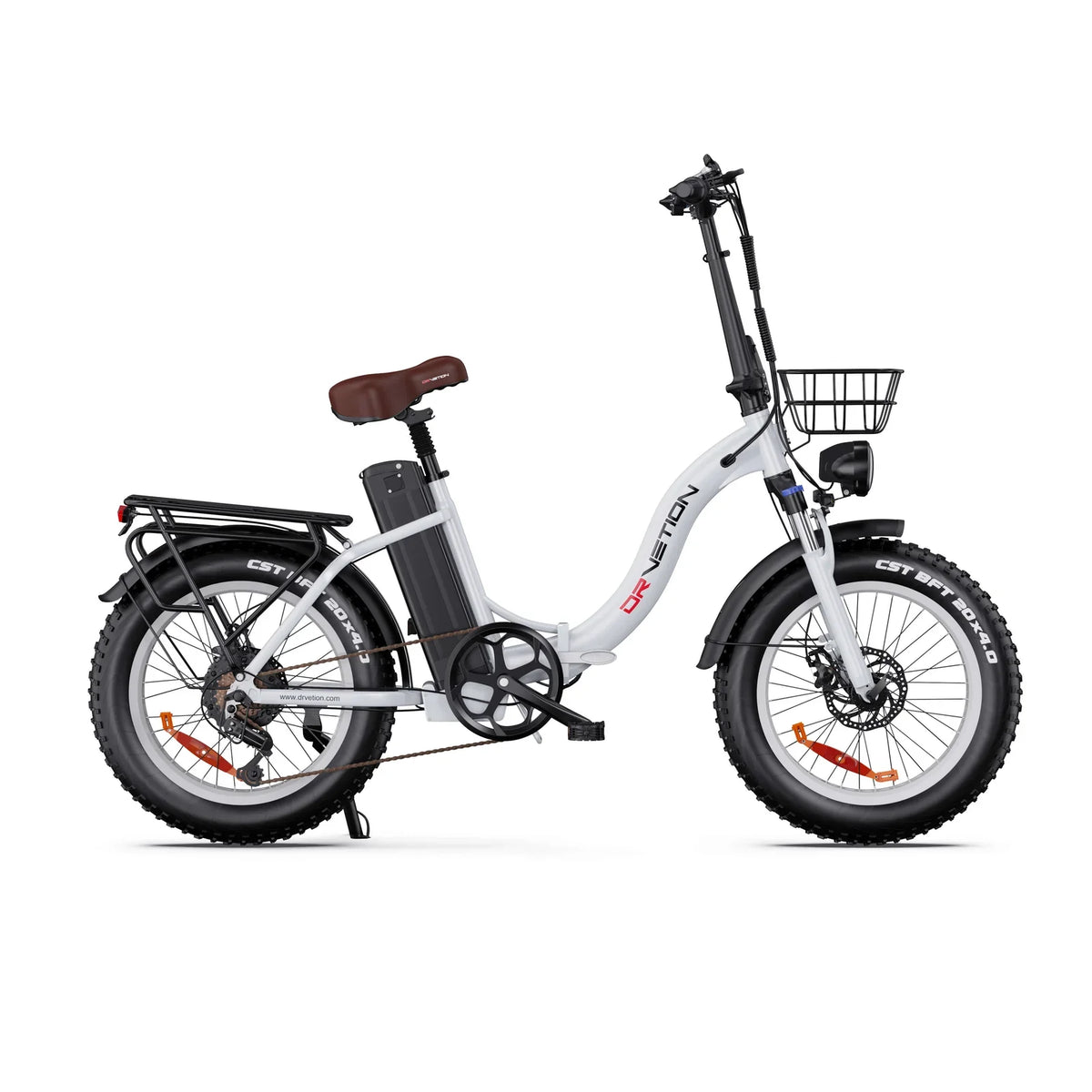
Think about the ride you will take most often, not just the most adventurous trip you might take once. Measure where the bike will be stored, consider stairs or elevators, and note whether you will regularly lift it into a vehicle. A folding frame can help with compact storage, but it does not eliminate the need to handle the bike safely.
Check the product page, not a category label
Model names alone do not tell you everything. Before ordering, review the current product page for the approved configuration, dimensions, included equipment, rider guidance, and compatibility details. If a requirement is important to your purchase—such as storage, carrying accessories, or a particular riding surface—contact Drvetion support before you order.
Plan for ordinary upkeep
Wider tires still need routine checks. Before a ride, look for visible damage, confirm that the tires are inflated according to the product guidance, and test the brakes in a safe area. NHTSA recommends riding a bike that fits and works, practicing away from traffic when you are new to a bike, and using equipment that helps other road users see you.nhtsa
Ride for the conditions
More tire volume does not remove the effects of weather, surface changes, or speed. Leave room to brake, slow before bumps and turns, keep both hands on the handlebars, and scan for hazards. Local rules on where and how an e-bike may be ridden can differ by state and community, so check the rules for your route before you set out.laws
A short first-ride checklist
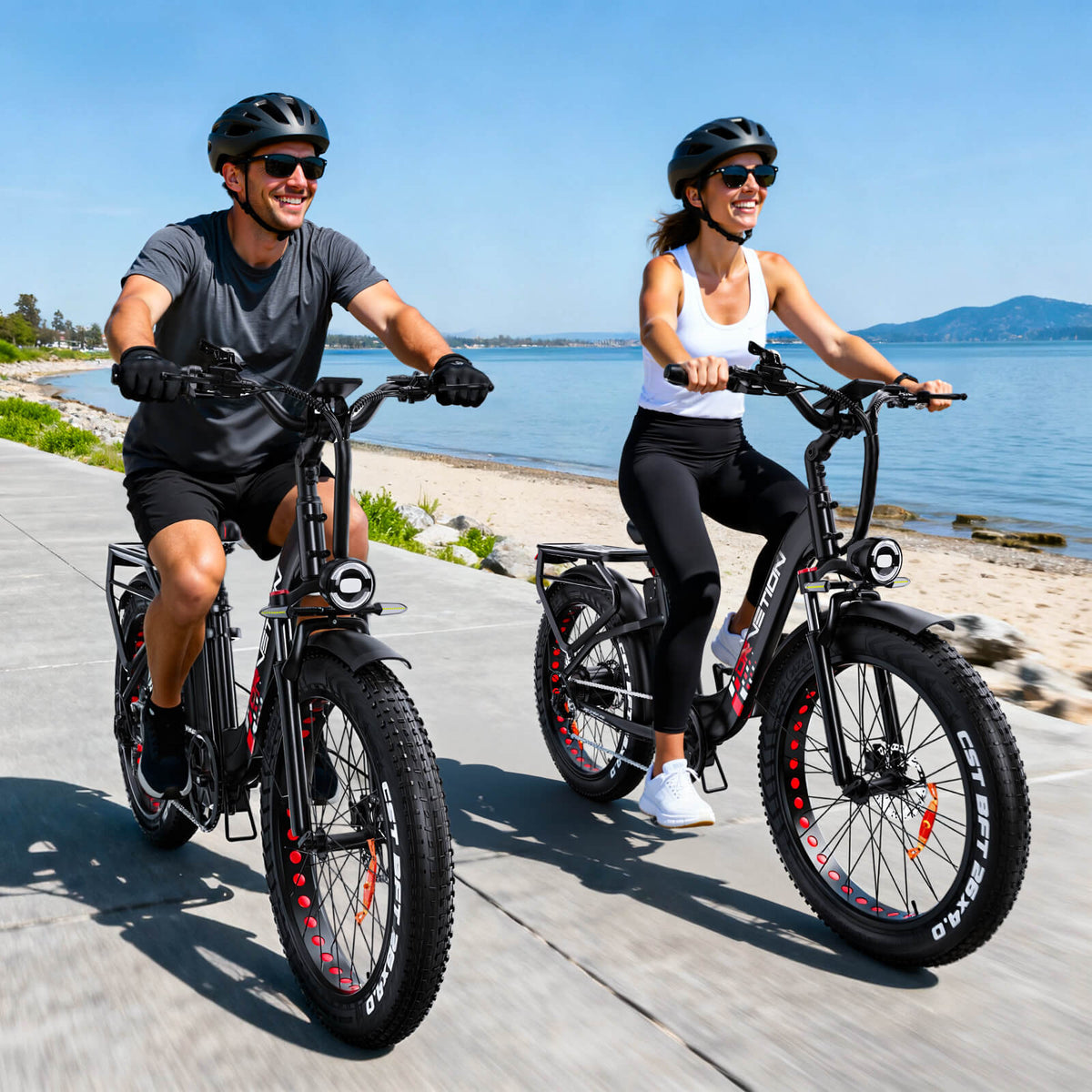
- Wear a properly fitted bicycle helmet and choose clothing that is easy to see.
- Check tire condition, brakes, handlebars, lights, and any cargo attachment.
- Start in a low-traffic area until the bike’s handling and controls feel familiar.
- Use a route that matches your experience and local e-bike rules.
- Give yourself extra space on wet, loose, or unfamiliar surfaces.
For a broader before-you-ride and charging checklist, see our upcoming safety guide or visit the Support Center with your model and question.
Choose the bike around the ride you want to make
A fat-tire e-bike can be a versatile option for riders whose everyday routes are not perfectly smooth. The useful question is not whether a wide tire is “better” in every situation. It is whether the current bike configuration, your intended route, and your storage needs work well together.
Explore the current Drvetion e-bike collection, compare the product details that matter to your routine, and ask support before ordering if any fit, compatibility, or policy detail is unclear.
Sources and editorial notes
NHTSA, Bicycle Safety, accessed August 1, 2026. General bicycle safety guidance; this article does not claim that any tire type prevents crashes.
PeopleForBikes, State by State Electric Bike Laws, accessed August 1, 2026. Laws and permitted riding locations vary by jurisdiction.
Additional safety reference: CPSC Micromobility Information Center, accessed August 1, 2026.
Share:
An E-Bike Safety Checklist for Safer Everyday Rides
An E-Bike Safety Checklist for Safer Everyday Rides